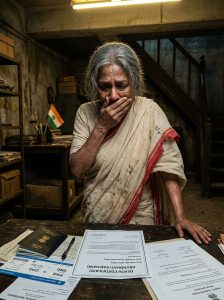
Meera’s voice was not a question.

“Why…” Meera’s voice was not a question. It was a small, dying thing. The photograph...

And when he read the first name aloud, Dhatri Aaji covered her mouth and began to sob.

And when he read the first name aloud, Dhatri Aaji covered her mouth and began...

“Who brought these papers into Justice Rao’s room?”

“Who brought these papers into Justice Rao’s room?” The title hit the room like a...

Then I broke the seal.

Then I broke the seal. The paper inside was old, folded carefully, carrying the faint...
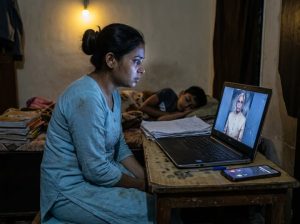
The phone rang so loudly in our one-room house that Daksheesh stirred on the floor.

The phone rang so loudly in our one-room house that Daksheesh stirred on the floor....
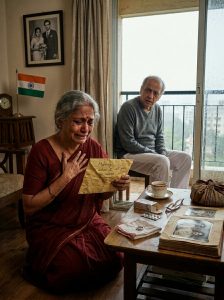
“Maitreyi, when I call you nurse, do not correct me if it hurts you too much.

“Maitreyi, when I call you nurse, do not correct me if it hurts you too...

I found Vanya at the landing, clutching the railing with both hands, as if the house might sink if she let go.

I found Vanya at the landing, clutching the railing with both hands, as if the...
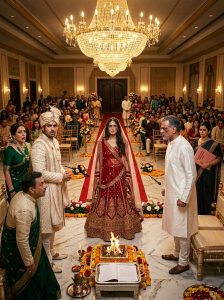
I found Vanya at the landing, clutching the railing with both hands, as if the house might sink if she let go. Her eyes went first to my torn saree. Then to the blood on my knees. Then to the police seal on the basement door. “Dadi,” she whispered, “is our house bad now?” I climbed the last step slowly. Every bone in my body protested, but I kept my back straight. Children do not need elders who feel no fear. They need elders who stand even while afraid. “No, beta,” I said, touching her cheek. “A house is not bad because bad people used a room. A house becomes bad only when good people stop telling the truth inside it.” She nodded as if filing the sentence somewhere important. Then she looked past me. “Will Papa come back?” The question had waited in her throat all day. I sat on the stair beside her. “Yes,” I said. “One day he may.” Her eyes brightened with painful hope. “But not to live here unless he becomes safe,” I added. The hope trembled. “That is allowed?” she asked. I smiled sadly. “It is required.” That night, Vanya slept in my bed with her feet pressed against my leg, the way Mahiransh used to sleep when he was five and frightened by thunder. I lay awake listening to her breathing and the sounds of police moving through my house below. At three in the morning, Saira came upstairs with a steel tumbler of tea. “You should sleep, ma’am.” “I died tomorrow,” I said. “I suppose I have extra time.” She almost smiled, then sat beside me. “The man who called you?” “He sent documents?” “Yes.” She placed a folder on the blanket. Inside were names. Not one. Not ten. Twenty-three. Twenty-three elderly people. Some marked “relocation completed.” Some marked “medical consent pending.” Some marked “family obstacle.” Each name had a property value beside it. Each value had a redevelopment estimate. Beside three names was one small word written in red. Closed. I looked at Saira. “What does closed mean?” Her face changed. “We don’t know yet.” I looked down at Vanya sleeping. Her little hand rested open on the pillow. A child’s hand should never have to pull a grandmother back from death. But hers had. By sunrise, the city commissioner knew my name. By noon, Helios Urban Redevelopers had locked its office doors. By evening, Saira had made sure they were opened again—this time with warrants. The man who had called me was named Nitin Kamat. He was twenty-eight, an accounts assistant with tired eyes and a conscience that had arrived late but alive. He came to my house wearing a faded blue shirt and fear like a second skin. “I kept copies,” he said, hands shaking as he gave Saira a drive. “At first I thought it was only tax adjustment. Then I saw repeated words. Dementia. Cardiac arrest. Foreign travel. Consent witnessed by son. Consent witnessed by nephew. Consent witnessed by daughter-in-law.” His voice cracked. “One old man came to the office last month. He was shouting that his son had stolen his flat. Security pushed him out. Next week his file was marked closed.” “What was his name?” I asked. Nitin swallowed. “Damodar Kulkarni.” Mrs. D’Souza, who had refused to leave my side since the night before, covered her mouth. “Damodar? From Lane Seven?” I knew him. A retired railway engineer who fed stray cats and argued with vegetable sellers over two rupees. “He moved to his daughter’s house,” I said slowly. Nitin lowered his eyes. “That is what the society was told.” The room chilled. Saira stood. “We go now.” “I am coming,” I said. “No, ma’am.” I looked at my former student. She had once been sent to my office for refusing to apologize to a boy who pulled her braid. I had told her then, “Anger is useful only if you teach it discipline.” Now she looked at me with the same fire. “You are injured.” “I am evidence,” I said. “And I am angry with discipline.” She did not argue after that. We found Damodar Kulkarni at Shantivan Memory Care Facility. Not dead. Not well. Locked in a private wing under the name “D. Kamat,” sedated so heavily he could barely lift his head. His daughter had died years ago. His son had filed a missing person complaint two days after signing a redevelopment consent as “legal guardian.” When I stood beside his bed and called him by name, his cloudy eyes shifted toward me. “Principal madam?” he murmured. I had never been so grateful to be recognized. “Yes,” I said, taking his dry hand. “And you still owe me six rupees from the tomato argument you won last winter.” A tiny sound escaped him. Not quite a laugh. But close enough to bring tears to Saira’s eyes. By the end of that week, seven elders were removed from private facilities. Three were found in relatives’ houses, their phones taken, their medicines changed. Two were already cremated under death certificates their neighbors had never questioned. One woman, Leelabai Joshi, was discovered alive in Nashik because her granddaughter had secretly kept calling her old number every Sunday. The calls never connected, but the girl refused to stop. That stubborn love became a clue. The newspapers called it the Helios Elder Property Racket. They printed photographs of buildings, police vans, sealed offices, and men hiding their faces under handkerchiefs. They wanted my photograph too. I refused at first. Then Vanya said, “Dadi, if other grandparents see you, maybe they will not be scared.” So I wore a crisp white saree, tied my hair properly, placed Vikram’s pen in my blouse pocket, and stood on my verandah. Not as a victim. As a warning. The reporters asked, “How did you know something was wrong?” I looked at Vanya behind the curtain. “A child asked a question adults were too greedy to hear,” I said. They asked, “Do you hate your son?” That question entered deep. I thought of Mahiransh’s first school uniform. His fever at twelve. His engineering admission. His wedding. His hand on my shoulder after Vikram died. Then I thought of the death certificate dated for tomorrow. “No,” I said. “Hate is too small for what this is. I grieve him. And I will testify against him.” That answer traveled farther than I expected. Some praised me. Some called me cruel. Some said, “After all, he is her son.” As if birth is a lifetime license. As if a mother’s womb is a vault where sons can store their crimes. Madhumita turned approver after ten days. Not because guilt blossomed in her suddenly. Because fear did. She admitted Mahiransh had debts from failed investments. She admitted Prakash promised quick money through redevelopment. She admitted Dr. Salunke had never examined me. When asked about Vanya, she broke. “I wanted to send her away only until things settled,” she said. I watched her statement from behind a glass panel. Until things settled. How easily people place children in the waiting room of evil. Vanya did not ask to meet her mother. Not at first. Then one evening, while doing homework at the dining table, she said, “Dadi, if Mamma cries, will police hit her?” “No.” “Will she be alone?” “Maybe.” Vanya chewed her pencil. “I am angry.” “That is allowed.” “I miss her.” “That is allowed too.” She looked at me with relief so large it nearly broke me. A week later, I took her to meet Madhumita under supervision. My daughter-in-law looked smaller without gold, without command, without the house staff running at her voice. She saw Vanya and began crying. Vanya did not run to her. She stood beside me. “Mamma,” she said, “why did you say Dadi was confused?” Madhumita sobbed. “I was scared of your father.” Vanya’s face hardened in a way no child’s face should. “I was scared too. But I told.” Madhumita covered her mouth. There are sentences that no court can improve. That was one. Months passed in courtrooms and offices. My knees healed. My sleep did not. Some nights I woke at 4:35 a.m., the time printed on my death certificate, and touched my own pulse like proof. Vanya began sleeping in her own room again, but left the door open. Mrs. D’Souza came every morning with gossip and boiled eggs, saying protein was necessary for revolutions. Saira created a volunteer network of lawyers, doctors, retired teachers, bankers, and two terrifying widows from my old parents’ association. We called it Tomorrow Alive. The name was Vanya’s. “Because your death was tomorrow,” she said, “but you were alive.” We opened a small office in the front room of my bungalow. The same room where Prakash had once praised “redevelopment potential” became the room where old people brought property papers wrapped in cloth, bank passbooks tied with rubber bands, wills they had not shown their sons, and fears they had never said aloud. An eighty-year-old woman came holding a sweet box. Inside were not sweets. There were blank papers her nephew had asked her to sign. A retired professor came whispering that his daughter had changed his medicines and made him sleep through bank visits. A couple came together, embarrassed, because their children had asked them to “prove mental fitness” before a family meeting. I stamped copies. Saira filed notices. Mrs. D’Souza made tea so strong it could revive the dead. And Vanya sat after school at the corner desk, drawing posters. READ BEFORE SIGNING. LOVE DOES NOT NEED BLANK CHEQUES. OLD DOES NOT MEAN AVAILABLE. One day, she drew a house with a secret basement and wrote beneath it: TRUTH NEEDS A BACK DOOR SOMETIMES. I framed that one. Mahiransh asked to see me after four months. I went. Not because he deserved it. Because I needed to look at him without running. He sat behind the glass, thinner, unshaven, eyes restless. The boy I had raised appeared only in flashes, like a photograph damaged by water. “Ma,” he said when the phone connected. I waited. “I made mistakes.” I almost put the receiver down. He saw my face and swallowed. “No. Crimes. I committed crimes.” That kept me seated. He looked down at his hands. “I told myself everyone does it. Builders, brokers, families. I told myself you would forgive me after the money came. I told myself the facility would take care of you. I told myself the death certificate was only backup.” Only backup. My son had reduced my death to paperwork insurance. Tears came to his eyes. “When did you become so rich that I became affordable?” I asked. He flinched. “I don’t know how to answer that.” “Good. Live with the question.” He pressed his hand against the glass. “Does Vanya hate me?” “No.” Hope entered his face. “She is better than you,” I said. “Do not mistake that for pardon.” He cried then. I watched. The mother in me wanted to forgive him just to stop the sound. The woman in me did not allow it. Before leaving, I said, “I will not save you from prison. I will save your daughter from becoming you.” He bowed his head. For once, he did not call me dramatic. The trial took a year. Helios collapsed. Prakash confessed to forging consent documents in twelve cases. Dr. Salunke was arrested at his cousin’s farmhouse. The private facility lost its license. Mahiransh was convicted of conspiracy, forgery, attempted wrongful confinement, and financial exploitation. When the judge read the sentence, he turned once toward me. Not asking me to save him. Only looking. I placed my hand over Vikram’s pen in my pocket. Then I looked away. Not from weakness. From decision. Outside the courtroom, reporters shouted. “Madam, justice?” I thought of the two elders who had been cremated before anyone asked questions. I thought of Damodar Kulkarni learning to walk again. I thought of Leelabai Joshi’s granddaughter holding her as if returned from the other world. I thought of Vanya, waiting at home with her school project on “My Hero,” which she refused to show me because she said it was a surprise. “Justice,” I said, “is not one sentence. It is a habit society must practice before the crime.” That evening, I went down to the basement alone. The police seals were gone now. The damp smell remained. So did Vikram’s metal box. I placed the printed death certificate inside it. Dated for the tomorrow I had survived. Beside it, I placed the first brochure of Tomorrow Alive. Then I locked the box. Not to hide it. To remember that proof has its own graveyard, and sometimes the dead document teaches the living. Upstairs, Vanya called, “Dadi! Come fast!” I climbed slowly. My knees still complained. Let them. Pain is not always an enemy. Sometimes it is the body reminding us it stayed. In the dining room, Vanya had placed two plates on the table. Mrs. D’Souza was there. Saira too. Damodar Kulkarni sat in Vikram’s old chair, arguing that the dal needed more salt. On the wall behind them hung Vanya’s school project. MY HERO: ARUNDHATI RAICHAND. Below it, she had drawn me in a white saree, holding a file in one hand and her hand in the other. I laughed and cried at the same time. “That drawing makes me look taller,” I said. Vanya hugged my waist. “You are.” Later, after everyone left and the house settled into night, I stood before Vikram’s photograph. “You were right,” I whispered. “Family sometimes enters with keys.” The house creaked softly, as if he had answered. I looked toward Vanya’s room. Her door was half open, light spilling into the corridor. For years, I had believed my final duty was to leave her a house. Now I knew better. A house can be forged away. A signature can be copied. A death can be printed before dawn. But courage, once shown to a child, beco

I found Vanya at the landing, clutching the railing with both hands, as if the...